The Ministry of Textiles and Jute of the GOB is responsible for the promotion, development, and regulation of its textile industry and jute sector. Every year the ministry organizes “National Textile Day” to promote and boost the capacity of the sector and attract investment. The ministry celebrated “National Textile Day” on February 27, 2024, with the theme “A country rich in smart textiles – Bangabandhu’s Bangladesh”. The success of National Textile Day mainly depends on the increasing cultivation of Cotton – the most used raw material of textiles. To promote the expansion and research of cotton production in Bangladesh, the Cotton Development Board (CDB) was founded by the Father of the Nation Bangabandhu Sheikh Mujibur Rahman in 1972 under the Ministry of Agriculture. The high dependency on raw materials poses significant business risks and low-value retention. The 2nd largest apparel producer in the world after China, Bangladesh is at the top of the world as a cotton importer. Bangladesh’s textile sector is almost 100% dependent on imported cotton. During Covid-19 the sector has faced manifold challenges like supply chain disruption, price hikes, organic certification issues, etc. giving the unbearable lessons of over-dependency on imported cotton.
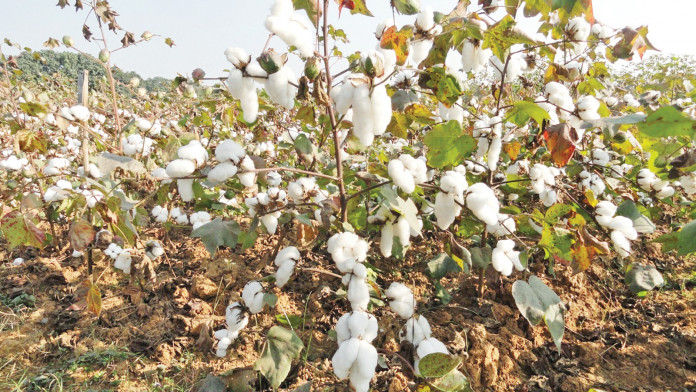
According to the Cotton Development Board, presently cotton has been produced in 39 districts including the Barind tract of Rajshahi. This production potential can be raised up to 5.0 lakh bale by expanding cotton cultivation in saline and drought-prone areas, hilly areas, char land areas, and bringing areas of riverbanks. Both the weather and soil conditions are favourable for cotton production in Bangladesh. Bangladesh can introduce hybrid cotton production for high-yielding modern varieties. Bangladeshi climate and soil are suitable for highly demanded Organic Cotton (OC) production, as broad opinion. In addition, cotton seed is a reliable source of edible oil. Bangladesh’s climate and soil conditions are favorable for cotton production. Cotton seeds are a reliable source of edible oil. Cotton oil contains more nutritional value compared to other edible oils such as soybean, mustard oil, and sunflower oil. Cotton oil cake, a by-product of cotton seeds, serves as an organic source of animal and fish feed.
Tobacco, a very controlled product is getting farmers’ attention to cultivating. If necessary, tobacco cultivation can be replaced by cotton cultivation. Brands/Buyers, BTMA, BGMEA, and BKMEA can extend support to the Cotton Development Board (CDB), under a Public-Private Partnership (PPP) model.
Written by: Dr. Mohammad Hasan (Bangladesh RMG and Sustainable Development)